My practice is centred around the belief that children and young people do best when they feel safe, understood, and connected.

Whether you’re looking for support for yourself, your child or your organisation, you are very welcome to get in touch. We can work together to explore whether any of my services fit your needs and whether art therapy feels like the right approach for you.
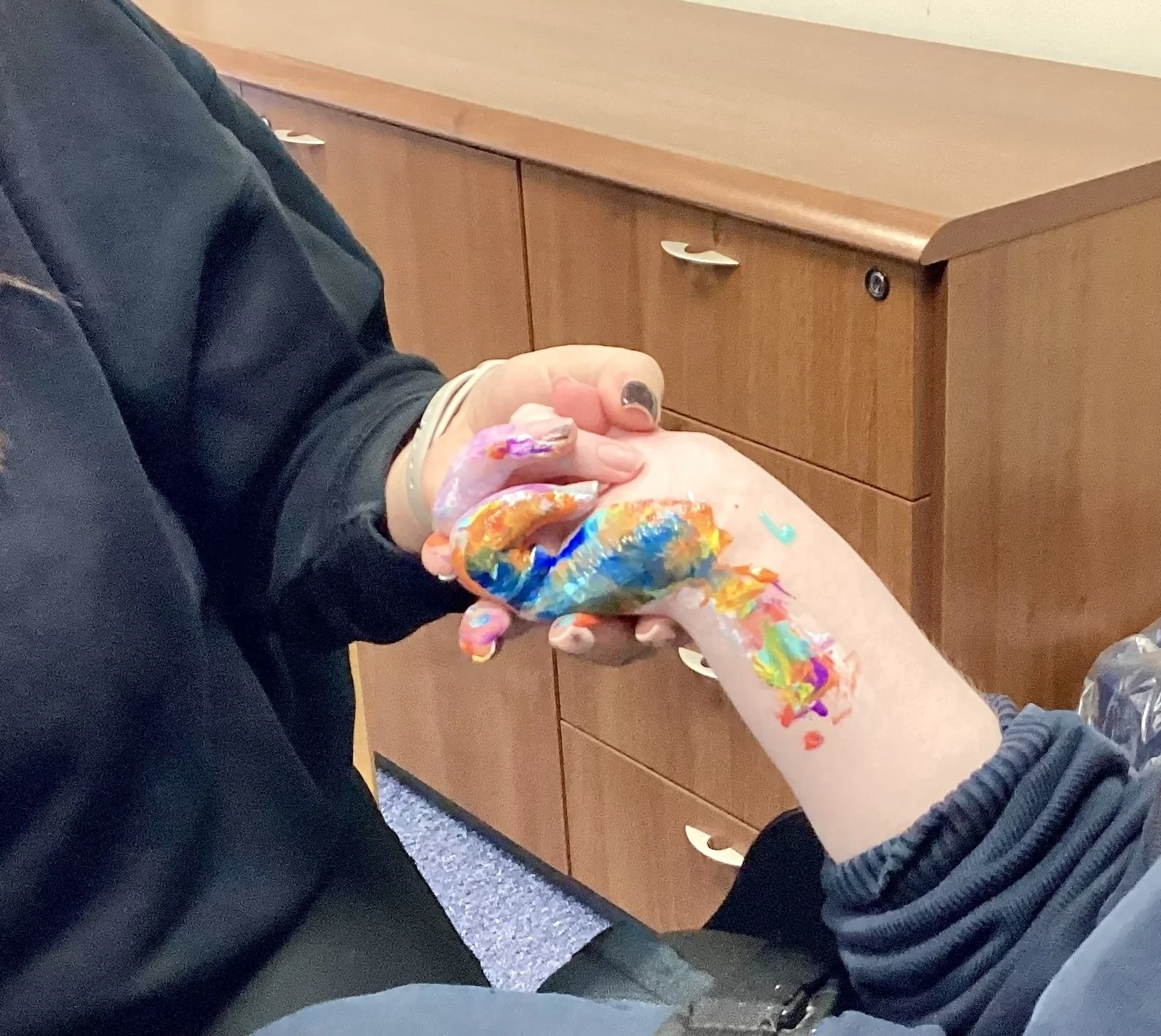
Services

Individual therapy for children and young people.

My specialist area is working with children and young people aged 5 and above. Children often communicate through play, creativity, and imagination, making art therapy a gentle and accessible way to explore emotions and experiences.

Sessions are held in-person in a welcoming therapy room close to the city centre, with school-based sessions available where appropriate.

School based therapy.

This service is ideal for schools and organisations looking to strengthen their emotional wellbeing offer. Delivering art therapy within your setting provides support for children and young people who may be experiencing emotional or behavioural difficulties in a familiar environment.

Offering these services within school can make therapy more accessible for children and young people who may not otherwise be able to access support and may struggle to engage with external services. This can be due to factors such as financial barriers or low motivation.

Individual therapy for adults.

Art therapy offers a supportive space to explore thoughts, feelings, and experiences at your own pace. It can help with emotional wellbeing, personal growth, and processing difficult experiences through creativity.

Sessions are guided by you and will be tailored to what feels most helpful for you to help achieve your goals.

Sessions are held in-person in a private therapy room convenient to Belfast city centre.

Group therapy and arts facilitation.

These services are well suited to schools and organisations such as summer schemes or youth clubs who are looking to support their users through shared, creative experiences.

Group art therapy provides space to explore emotions, build peer connection, and develop communication and coping skills.

Arts facilitation offers group creative workshops that encourage expression, reflection, and participation in a non-clinical, accessible way.

These workshops are not therapy, but can support whole-class groups, targeted cohorts, or staff wellbeing initiatives to foster creativity, communication, and emotional awareness.

  • “I found I could say things with color and shapes that I couldn’t say any other way — things I had no words for.”

    Georgia O’Keeffe

FAQs

  • You don’t need to be certain before getting in touch. Many people reach out when they are unsure or exploring options. We can begin with a conversation to think together about whether art therapy feels like a good fit for your needs and circumstances.

  • Sessions are typically 50 minutes, but the length of sessions may vary depending on age and need, and this will be discussed during the initial consultation process.

  • Yes. I offer a free initial consultation (usually 15–20 minutes by phone or online). This is an opportunity to ask questions, talk through your needs, and understand more about how I work. There is no obligation to continue with therapy afterwards.

  • There is no fixed number of sessions. This will depend on individual needs and goals, and is regularly reviewed together. Some people attend for a shorter piece of focused work, while others benefit from longer-term support.

  • Yes, sessions are confidential. However, there are a few exceptions to confidentiality in line with safeguarding guidelines, which will be explained clearly at the beginning of therapy.

  • Sessions are usually held weekly to provide consistency and continuity. If fortnightly or monthly sessions are more suited to your needs this can be discussed during the consultation process.

  • No. There is no requirement to have any artistic skill or experience. Art therapy is about expression, not ability. You do not need to feel confident in art-making for it to be helpful.

  • At present, I offer in-person sessions only, as I believe this best supports the creative and relational nature of art therapy work.

  • If you are in immediate distress or feel that you are unable to keep yourself safe, please seek immediate care as soon as possible. Art therapy is not a suitable service in an emergency.

    You can contact your GP, attend your nearest A&E, or call 999 in an emergency.

    If in Northern Ireland you can also contact:

    • Lifeline (24/7 crisis helpline) on 0808 808 8000

    • Samaritans on 116 123

    If you are not in immediate danger but are looking for support, you are very welcome to get in touch. I will respond as soon as possible during working hours to discuss whether ongoing therapy may be helpful.